
Sanilac County Bench Warrants Explained
Michigan calls it a bench warrant when the order comes from the court itself rather than from a new criminal charge. In Sanilac County the trigger is usually a missed appearance. Unpaid fines and costs work the same way. So does a broken condition in a court order. The point of the warrant is to bring the person back before the judge so the missed obligation can be sorted out. Do not treat it as harmless paperwork, because a phone call, an online payment, or a clean case-search result will not clear it on its own. Only the issuing court controls recall.
The 48-Hour Sanilac Bench Warrant Window
Michigan Court Rule 6.103 sets the framework courts use after a criminal failure to appear. In Sanilac County, the court ordinarily waits 48 hours before issuing the bench warrant. Weekends and court holidays do not count toward that span. The rule also carves out exceptions, including assaultive or domestic-violence allegations, a prior failure to appear, and an urgent reason the court states on the record. That window is not a grace period. It describes the court's process. It promises nothing about those two days. Rather than reading risk from a public docket, call the Sanilac County clerk and ask whether a warrant was entered.
How Sanilac County Bench Warrants Are Issued
A Sanilac County bench warrant begins with something the court itself controls. A missed arraignment, a skipped hearing, a missed probation review, an unpaid obligation, or a failure to follow a directive can all start it. A judge or magistrate signs the order. The docket records the issuance. The paperwork then goes to a law-enforcement agency for service. Because the issuing court owns the order, the fastest answer comes from the clerk who keeps that docket. The Sheriff's Office can document an arrest or a service attempt, but it cannot recall the warrant.
Missed Sanilac Court Date and Bench Warrants
One planned call settles most of the doubt. Write the Sanilac County case number down first, call the court listed on the ticket, notice, or docket, and note what the clerk tells you.
- Ask whether the docket shows a bench warrant, an arrest warrant, or another process, and ask for the issuance date.
- Ask whether that entry is still active, recalled, or superseded by a later order.
- Ask whether the court accepts a voluntary appearance, and whether a judge or magistrate must review the matter first.
- Ask whether a motion is required and whether counsel should file it.
- Ask what identification or documents to bring, and whether a hearing date can be set now.
Bench Warrants and Arrest Warrants Compared
Both are court process. In Sanilac County, each can lead to custody, and the real difference lies in where the order comes from and what usually has to happen next.
| Feature | Bench Warrant | Arrest Warrant |
|---|---|---|
| Typical trigger | A missed appearance, unpaid obligation, or violated order | A complaint and a probable-cause finding on a new charge |
| Issuing stage | Inside a case the person already has | At the start of a case |
| Court contact | The court that holds the case | The court that issued the warrant |
| Common next step | Voluntary appearance, motion, bond, or a directed payment | Appearance with counsel, arraignment, and release conditions |
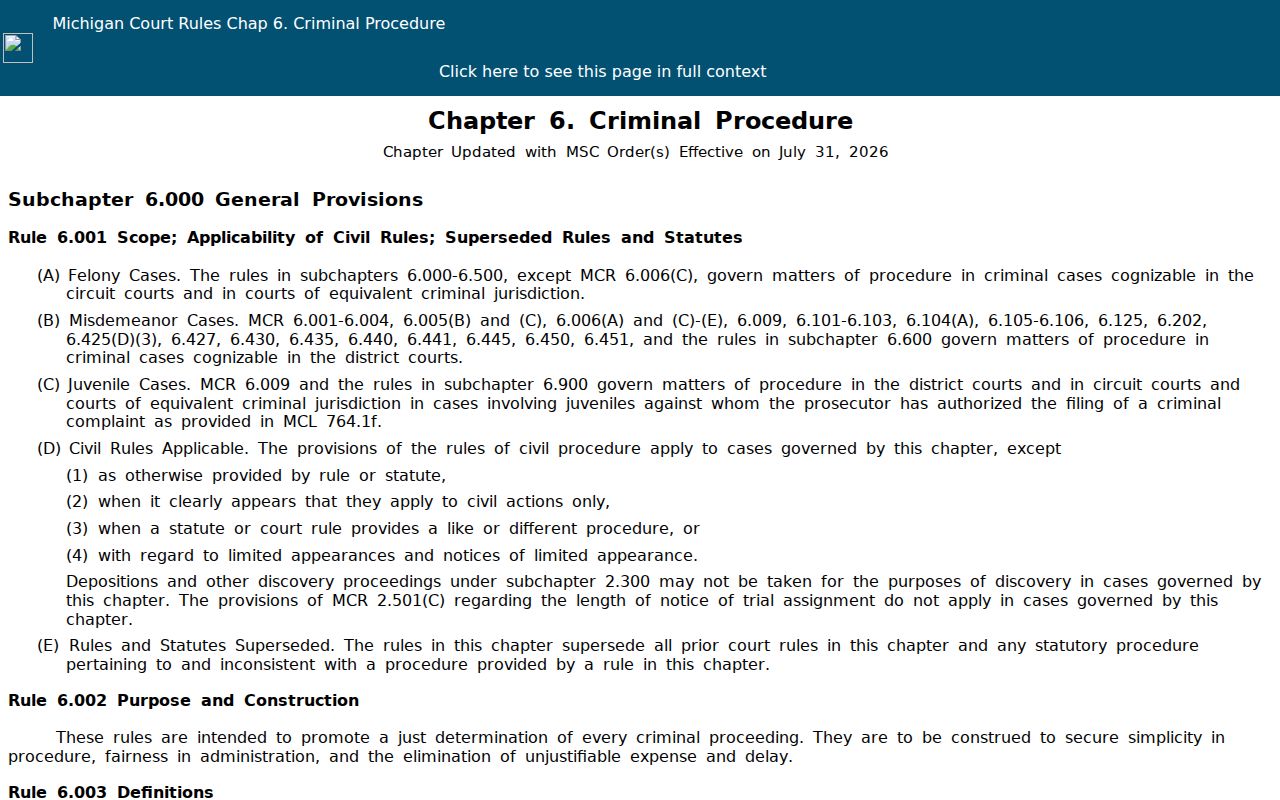
The rules live in Chapter 6 of the Michigan Court Rules. Sanilac County readers will find the failure-to-appear framework and the voluntary presentation rule there.
Bench Warrant Recall in Sanilac County
Recall and dismissal are different things, and confusing them causes real trouble. Recall ends the warrant's active effect. It settles nothing about the charge or the case. A Sanilac County court can recall a bench warrant, set a new date, and keep the matter moving toward a plea, a trial, or another outcome. A dismissal ends the case itself. When you hear the word recall, ask what stays scheduled, which conditions continue, and whether a payment or appearance obligation survives. Those answers tell you where you actually stand.
Resolving a Sanilac County Bench Warrant
Only the issuing court can say how to resolve its warrant. Every Sanilac County case is different. Michigan Court Rule 6.105 covers voluntary presentation to the issuing court within one year after issuance. When a judicial officer is available, arraignment happens promptly; otherwise the court recalls the warrant and sets a future date. Ask the clerk which track fits. Exceptions apply, including assaultive or domestic-violence matters.
- Call the court before traveling and ask for the clerk window and the current procedure.
- Ask whether the court accepts a voluntary appearance or requires a motion filed by counsel.
- Ask about bond, conditions of release, and where any payment must be made.
- Keep every receipt, filed motion, and signed order, and ask when the docket will update.
Before you go: Posted office hours do not guarantee a same-day hearing, so confirm that a judicial officer can see the case.
Sanilac Bench Warrant or Family Contempt?
Family Division matters run on their own track. A contempt case can grow out of a child-support, custody, or parenting-time order, and the rules differ from a traffic or misdemeanor failure to appear. The Friend of the Court handles custody, support, and parenting-time questions in Sanilac County. It is not a criminal warrant database.
Key Rules: Juvenile and child protective records are confidential, so the Family Division, not a public search, is the right first contact for those matters.
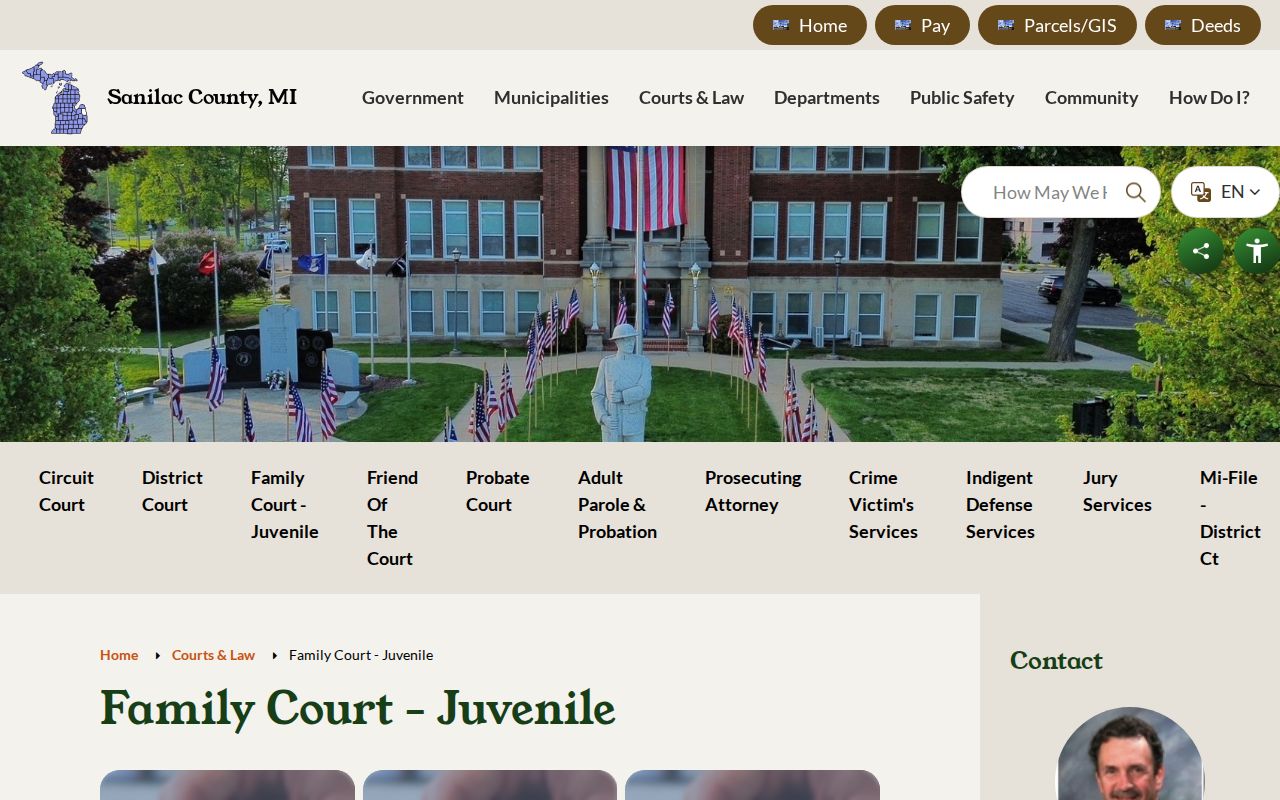
Need the Family Division itself? Its Family and Juvenile page carries the division contact for Sanilac County and the routing for protected records, which keeps a confidential case out of an adult warrant search.
Finding the Court That Issued the Warrant
The case number tells you which Sanilac County court to call, and the court printed on a ticket or notice does the same. The county's court map is compact.
| Court | Covers | Contact |
|---|---|---|
| 73A District Court | Adult misdemeanors, traffic and parking civil infractions, felony preliminary examinations | (810) 648-3250, Room 302 |
| 24th Circuit Court | Felonies after bindover, Circuit criminal matters | (810) 648-2120, Room 303 |
| Family Division / Juvenile | Juvenile offenses, child protective matters, Family Division contempt | (810) 648-3220 |
| County Clerk | Circuit Court records and clerk services | (810) 648-3212 |
If another Michigan county issued the warrant, contact that county's court. Sanilac County cannot recall a warrant it never issued.
Reading a Sanilac Docket Entry
Docket entries are written for court staff. In Sanilac County, abbreviations can pile up fast, so treat each label as a question for the clerk rather than a puzzle you decode alone.
- FTA
- A failure to appear. The event that often leads to a bench warrant.
- BW
- A bench warrant entry, meaning the court issued its own process in the case.
- Bond
- A release condition set by a judge or magistrate, and it can carry requirements beyond payment.
- Arraignment
- The appearance where the court addresses the charge, counsel, plea, and release.
Note: The steps for clearing a Sanilac County bench warrant also appear on the county warrant records home page. Start there for the full sequence.